
A thermostatic mixing valve London Ontario homeowners rarely think about — until their hot water stops working. At Triton Home Service, a mixing valve is the first thing I consider when a homeowner calls about hot water problems. Before I even look at the water heater. After 26 years in the trade I’ve seen too many perfectly good water heaters replaced when the real problem was a failed mixing valve that cost a fraction of the price to fix.
Here is what every London homeowner needs to know about thermostatic mixing valves.
What Is a Thermostatic Mixing Valve and Why Does Your Home Have One?
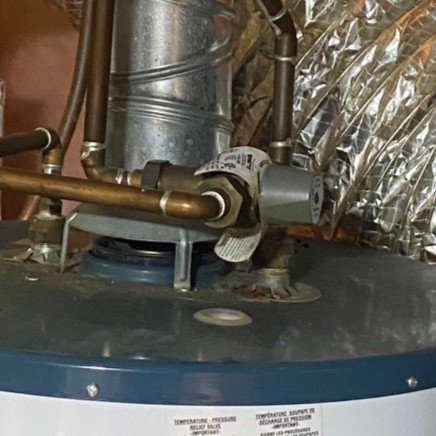
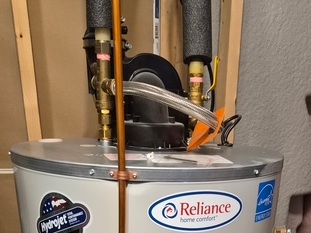
A thermostatic mixing valve is a mechanical device installed above your water heater. Its job is to temper your hot water down to a safe delivery temperature before it reaches your taps, showers, and appliances.
Here is why both temperatures in that sentence matter.
Your water heater is set to 140 degrees Fahrenheit. That temperature is not an accident. At 140 degrees, stored water kills Legionella — the bacteria responsible for Legionnaire’s disease. Water stored in a tank at lower temperatures creates exactly the conditions Legionella needs to grow. Therefore, keeping your water heater at 140 degrees is a health decision, not a comfort one.
However, 140 degree water will scald a person who isn’t paying attention. For children who can’t react quickly enough and elderly residents who may have reduced sensitivity, 140 degree water at the tap is genuinely dangerous.
The thermostatic mixing valve solves both problems at once. It keeps your tank at 140 to eliminate Legionella risk. It then blends cold water into the hot supply to deliver water at approximately 120 degrees Fahrenheit to your fixtures — hot enough for comfort, safe enough for everyone in the home.
“Your water heater needs to be at 140 degrees to keep your water safe. But 140 degrees at your tap can hurt someone. The mixing valve is what bridges that gap.” — Aron Oretan, Red Seal Plumber and Steamfitter, Triton Home Service
According to Health Canada, Legionella bacteria grow most rapidly in water stored between 77 and 108 degrees Fahrenheit — making proper water heater temperature and mixing valve installation critical components of residential water safety.
Is a Thermostatic Mixing Valve Required by Code in Ontario?
Yes. A thermostatic mixing valve above the water heater is required by the Ontario Plumbing Code in residential applications. It is not optional and it is not an upgrade. It is a code requirement.
Furthermore, it is there for a reason. Scalding injuries from residential hot water are more common than most homeowners realize — particularly among young children and elderly residents who cannot react quickly to sudden temperature changes.
If your home does not have a thermostatic mixing valve above the water heater, call us. That is a code deficiency and a safety issue that needs to be corrected.
What Goes Wrong With a Thermostatic Mixing Valve
Like any mechanical device, a thermostatic mixing valve eventually fails. In London Ontario the most common brand I encounter is made by Watts — a good valve that performs reliably for years. However, when it does fail the result is almost always the same.
A failed mixing valve typically stops delivering hot water and allows only cold water to reach your fixtures. The water heater is working perfectly. The mixing valve above it has stopped doing its job.
Triton Field Note: “When a homeowner calls me and says their hot water isn’t working — the first thing I think about is the mixing valve. Not the water heater. I’ve seen too many water heaters replaced unnecessarily because nobody checked the mixing valve first.” — Aron Oretan, Triton Home Service
The symptoms homeowners report are almost always the same — no hot water, inconsistent temperature, or water that never gets warm enough. In most cases they are convinced their water heater has failed. In many cases they are wrong.
The Mistake That Costs London Homeowners Money
This is the conversation I have more often than I’d like.
A homeowner calls about no hot water. I recommend replacing the mixing valve and the water heater — both at the same time. The homeowner decides to save money and replace only the water heater. The mixing valve stays.
Three months later I get a panicked call. Their brand new water heater isn’t working.
I send a technician. The water heater is fine. The old mixing valve that was installed with the previous water heater has now failed — and it’s causing exactly the same symptoms that prompted the original call.
As a result, the homeowner pays for two service calls, two diagnostic visits, and a mixing valve replacement on top of the water heater they already bought. The money they saved by not replacing the mixing valve the first time costs them significantly more in the end.
“I always recommend replacing the mixing valve at the same time as the water heater. If a homeowner chooses not to, I make sure they understand exactly what the mixing valve does and what to look for if it fails — so I don’t get a panicked call blaming a brand new water heater.” — Aron Oretan, Triton Home Service
This is standard practice at Triton. We replace both at the same time. We explain why. And if the homeowner declines, we make sure they know exactly what to watch for.
What Does a Thermostatic Mixing Valve Installation Actually Involve?
The job is straightforward for an experienced plumber. However, the time varies depending on the situation.
A like-for-like replacement — same brand, same connections — involves shutting down the water supply, draining the system, and swapping the valve. That takes approximately 30 to 40 minutes.
Installing a different brand or a new valve where none existed before involves cutting pipe, soldering or pressing new connections, and draining the full system. That takes approximately one to one and a half hours.
Either way it is a fraction of the cost and disruption of replacing a water heater unnecessarily. Therefore, if your hot water has stopped working — call us before you assume the worst.
For a full overview of our plumbing services across London and Southwestern Ontario visit our Triton Home Service plumbing services page.
Book Your Mixing Valve Inspection or Replacement
If your hot water is inconsistent, cold, or not performing the way it used to — don’t replace your water heater until a licensed plumber has checked your mixing valve first. It could save you thousands of dollars.
Call Triton Home Service at 226-270-5177 or book directly below.
Book your mixing valve inspection
Frequently Asked Questions: Thermostatic Mixing Valve London Ontario
What does a thermostatic mixing valve do?
It blends cold water into your hot water supply to deliver a safe temperature at your fixtures — typically around 120 degrees Fahrenheit. Your water heater stays at 140 degrees to prevent Legionella growth. The mixing valve protects occupants from scalding at the tap.
Is a thermostatic mixing valve required in Ontario homes?
Yes. The Ontario Plumbing Code requires a thermostatic mixing valve above the water heater in residential applications. It is a code requirement, not an optional upgrade.
How do I know if my mixing valve has failed?
The most common symptom is no hot water or water that never gets warm enough — even though your water heater is working normally. If your water heater is running but your water is cold or lukewarm, call a licensed plumber to check the mixing valve before replacing the water heater.
How long does a thermostatic mixing valve last?
A quality mixing valve In London Ontario typically lasts 8 to 15 years depending on water quality and usage. Hard water accelerates wear on the internal components.
Should I replace my mixing valve when I replace my water heater?
Yes. Triton always recommends replacing both at the same time. An old mixing valve installed on a new water heater is a common cause of callbacks and unnecessary service calls.
What brand of mixing valve does Triton install?
The most common brand in London Ontario is Watts — a reliable and well-supported product. The right valve for your application depends on your system. We specify based on the job.
Can a mixing valve affect my water pressure?
A failing mixing valve can restrict flow and affect both temperature and pressure at your fixtures. If you’re experiencing both low pressure and temperature issues simultaneously, the mixing valve is a likely cause.
What is Legionnaire’s disease and what does it have to do with my water heater?
Legionnaire’s disease is a serious respiratory illness caused by Legionella bacteria. Legionella grows in stored water between approximately 77 and 108 degrees Fahrenheit. Keeping your water heater at 140 degrees kills the bacteria. The mixing valve then tempers that water to a safe delivery temperature at your fixtures.
Book your thermostatic mixing valve inspection with Triton Home Service
Reference: Health Canada — Legionella and Residential Hot Water Systems
Aron Oretan is a Licensed Red Seal Plumber and Steamfitter, UA Certified Instructor, and founder of Triton Home Service. With 26 years in the trade, licences in plumbing, steamfitting, and gas fitting, and five years teaching at Fanshawe College, he brings classroom expertise and field experience to every job in London, Woodstock, St. Thomas, and Southwestern Ontario. Phone: 226-270-6424 | tritonservice.ca