
Backflow prevention London Ontario homeowners often misunderstand — and that misunderstanding matters. Most people hear the words backflow prevention and think sewer backup. However, backflow prevention has nothing to do with your sewer system. It’s about protecting your drinking water from contamination at the source. After 26 years in the trade and a Cross Connection Control Specialist certification, this is one of the most important topics I explain to London homeowners — because the consequences of getting it wrong affect everyone on your street, not just you.
Your Drinking Water Has More Protection Than You Realize
The City of London filters your water, chlorinates it, and keeps it pressurized before it reaches your tap. That pressurization is actually a form of protection — one most people never think about. Because the system stays pressurized at all times, water can leak out but contaminants have a much harder time getting in.
However, that protection has one critical vulnerability. If pressure drops — from a water main break, a fire truck drawing water, or any other cause — water can flow backward. Furthermore, in a cross connection situation that means contaminated water flows directly into your clean drinking water supply. Therefore backflow prevention isn’t a nice to have. It’s the last line of defence between a contamination event and your tap.
The Stratford Ontario Story That’s in Every Backflow Textbook
This example comes directly from OWWA training materials — and it happened right here in Ontario.
A fire truck in Stratford connected to the municipal water system to fight a fire. Fire trucks use positive displacement pumps that actively suck water from the system. There was a new car wash nearby. The fire truck’s pump sucked soap from the car wash into the potable water system.
Depending on the type of soap that represents a moderate to severe health hazard. If your house was downstream when pressure was restored — soap came out of your tap. Not hypothetically. Actually. That is not a hypothetical. That happened in Ontario.
Backflow preventers exist for exactly that reason.
“A fire truck connected to the city water system and sucked soap from a car wash into the drinking water supply. That’s not a worst case scenario. That’s a real event that happened in Ontario and it’s why cross connection control matters.” — Aron Oretan, Cross Connection Control Specialist, Triton Home Service
It Happened on My Street in Old South London
I’ve seen the consequences of backflow firsthand — in my own home.
About ten years ago, before I replaced my electric water heater with a tankless unit, we had a water main break in the winter on my street in Old South London. A line broke downstream of my house. Because my old electric water heater fed water in at the bottom of the tank, when that line broke all the water from my water heater drained backward out to the city.
There were no chemicals involved so there was no contamination hazard. However, what it did to my water heater was significant. The tank drained completely. The electric element inside had no water around it. It burned out.
One water main break downstream cost me a water heater element replacement — because there was no backflow protection stopping my system from draining backward.
Triton Field Note: “Backflow doesn’t just mean contamination coming in. It can also mean your water draining out in the wrong direction at the wrong time. I learned that lesson on my own street in Old South.” — Aron Oretan, Triton Home Service
Backflow Protection Is Already Built Into Your Home — Here’s How
Most homeowners don’t realize that backflow protection is built into every plumbing fixture in their home. The most fundamental form is something you look at every day without thinking about it.
Look at your kitchen sink. The top of the sink basin is the end of the sewer system. The outlet of your faucet is the end of the water system. The air gap between those two points — by Ontario Plumbing Code a minimum of two pipe diameters and not less than one inch — is your first line of backflow protection. That air gap physically prevents sewer water from ever being siphoned back into your drinking water supply.
That’s called an air gap and it’s the simplest and most reliable form of backflow prevention that exists.
However that air gap can be compromised. If you attach a hose to your laundry sink faucet and drop it into a bucket of standing water — you’ve created a cross connection. If you leave your garden hose submerged in your swimming pool while the water is on — you’ve created a cross connection. In a backflow situation whatever is in that bucket or that pool can be pulled back into your drinking water.
That is exactly what hose connection vacuum breakers are designed to prevent.
Hose Connection Vacuum Breakers: What They Are and Why Every London Home Needs One
Every outdoor hose bib in Ontario should have a hose connection vacuum breaker installed. This is not optional — it is a plumbing code requirement.
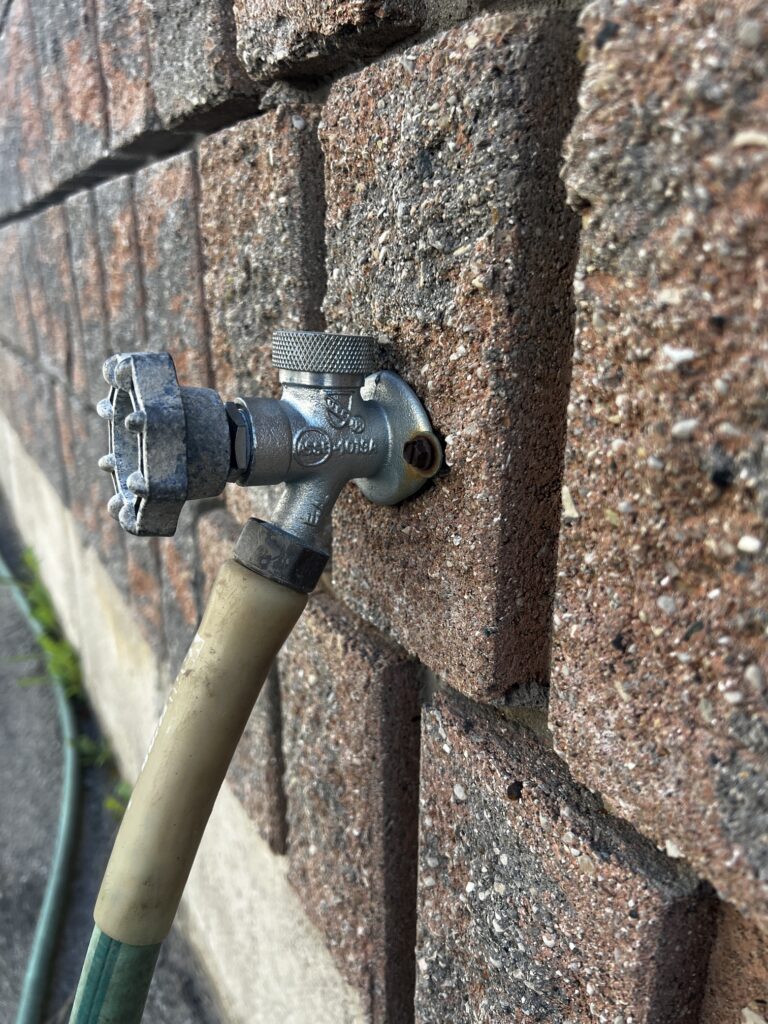
A hose connection vacuum breaker is a small device that threads onto the end of your outdoor hose faucet or is built directly into the faucet itself. Here is how it works.
Turn the water on — a small internal door closes and water flows normally through your hose. Turn it off — that door opens and pulls air into the faucet. That air break stops contaminated water from siphoning backward into your drinking water supply. Leave your hose sitting in a pool or a bucket and that little device is the only thing standing between that water and your tap.
According to the Ontario Plumbing Code, hose connection vacuum breakers are required on every hose bib connection in residential construction. Furthermore, they are inexpensive, widely available at any hardware store, and can be installed by any homeowner in minutes.
What Every London Homeowner Should Do Right Now
Go outside and look at your hose bib. Check whether you have a hose connection vacuum breaker installed. It will look like a small cap or device on the end of the faucet or between the faucet and your hose connection.
If you don’t have one — buy one. They are available at any hardware store and thread directly onto the end of your existing faucet. This is one of the few plumbing tasks I genuinely encourage homeowners to handle themselves. It is that straightforward.
If you do have one there are two things to know about normal operation and one warning sign to watch for.
Under normal operating conditions a hose connection vacuum breaker will spit or drip small amounts of water. That is normal. The internal mechanism is doing its job.
However if your vacuum breaker is dripping constantly it is time to repair or replace it. The internal seal has failed and the device is no longer providing reliable protection.
One more thing — these devices are not built for continuous use. Twelve hours maximum. Run your hose longer than that and you’re killing the device that’s protecting your drinking water.
For a full overview of our plumbing and cross connection control services across London and Southwestern Ontario visit our Triton Home Service plumbing services page.
Book a Backflow Prevention Consultation
Protecting London’s drinking water is a shared responsibility. If you have questions about cross connection control, hose connection vacuum breakers, or backflow prevention devices in your home or commercial property — call Triton Home Service.
Aron Oretan is a City of London registered backflow tester and Cross Connection Control Specialist. One of very few licensed professionals in London with this designation.
Call 226-270-5177 or book directly below.
Book your backflow prevention consultation
Frequently Asked Questions: Backflow Prevention London Ontario
What is backflow prevention and why does it matter?
Backflow prevention stops contaminated water from flowing backward into London’s clean drinking water supply. It protects your home and your neighbours from potential health hazards caused by cross connections between potable and non-potable water systems.
Is backflow prevention the same as sewer backup protection?
No. These are two completely different things. Sewer backup protection stops sewage from entering your home through floor drains. Backflow prevention stops contaminated water from being pulled backward into your drinking water supply through cross connections.
What is a cross connection?
A cross connection is any physical link between your potable drinking water system and a non-potable source. A garden hose submerged in a swimming pool is a cross connection. A hose dropped into a bucket of cleaning solution is a cross connection. Both create a potential backflow hazard.
Does my London home need a hose connection vacuum breaker?
Yes. Every outdoor hose bib in Ontario requires a hose connection vacuum breaker — full stop. No exceptions. If yours doesn’t have one go to the hardware store today. It threads onto your existing faucet in minutes and costs less than ten dollars.
My vacuum breaker is dripping — is that normal?
A small amount of spitting or dripping during normal operation is expected. However constant dripping indicates a failed internal seal. Replace the device when you notice continuous dripping.
How long can I leave my hose running with a vacuum breaker installed?
These devices are built for intermittent use. Twelve hours maximum. Leave it running longer and you’re shortening the life of the device and risking its effectiveness.
What causes a backflow situation?
Backflow occurs when pressure drops in the potable water system — from a water main break, a fire truck drawing water, or other pressure loss events. In a cross connection situation that pressure drop can pull non-potable water backward into the drinking water supply.
What is the difference between a vacuum breaker and a testable backflow preventer?
A hose connection vacuum breaker is a simple mechanical device for residential hose connections. Testable backflow preventers protect commercial properties and homes with both city water and a well. These devices require annual inspection by a certified tester — not optional, not negotiable. Without that annual test you have no way of knowing whether the device is actually working. Aron Oretan holds City of London backflow tester registration and BSI Online registration for Woodstock and Tillsonburg.
Book your backflow prevention consultation with Triton Home Service
Reference: Ontario Water Works Association — Cross Connection Control and Backflow Prevention
Aron Oretan is a Licensed Red Seal Plumber and Steamfitter, UA Certified Instructor, and founder of Triton Home Service. With 26 years in the trade, licences in plumbing, steamfitting, and gas fitting, and five years teaching at Fanshawe College, he brings classroom expertise and field experience to every job in London, Woodstock, St. Thomas, and Southwestern Ontario. Phone: 226-270-5177 | tritonservice.ca