
If you manage a commercial building in London, Ontario, there’s a piece of equipment in your mechanical room that you’ve probably never thought about, until it fails. It’s called a backflow preventer, and on a fire protection system, it’s one of the most important devices in the building that almost nobody notices.
We recently found a failed check valve on a six inch Watts Series 350 double check backflow preventer during annual testing at a facility we service regularly. The building is only about three years old. It has several backflow devices protecting different systems, and this was the only one, out of all of them, that failed a check it couldn’t repair on the spot.
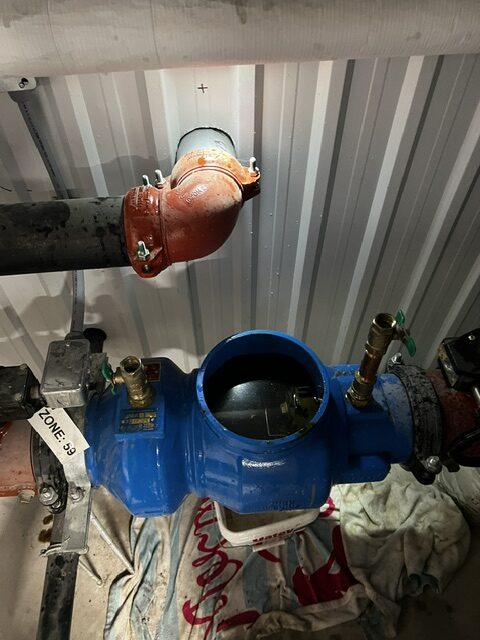
Why This Device Matters More Than It Looks
A backflow preventer on a fire protection system exists for one reason, to stop water from flowing the wrong way. Fire sprinkler lines sit full of water that almost never moves. Over time, that water turns stagnant, dark, and scaled. In a building this age, that water had likely been sitting untouched for the full three years since installation.
Under normal conditions, that’s not a problem, the water stays contained inside the fire system. But if a real backflow event happens, say a fire truck several streets away drafting water hard from the municipal main, and the double check has failed, that stagnant, scaled sprinkler water can get pulled backward into the potable water system. That’s a direct contamination risk to the building’s drinking water, not a theoretical one.
This is exactly why annual testing is mandated by law across London and the rest of Ontario for these assemblies. It’s not paperwork for its own sake.
What a Failed Check Actually Looks Like
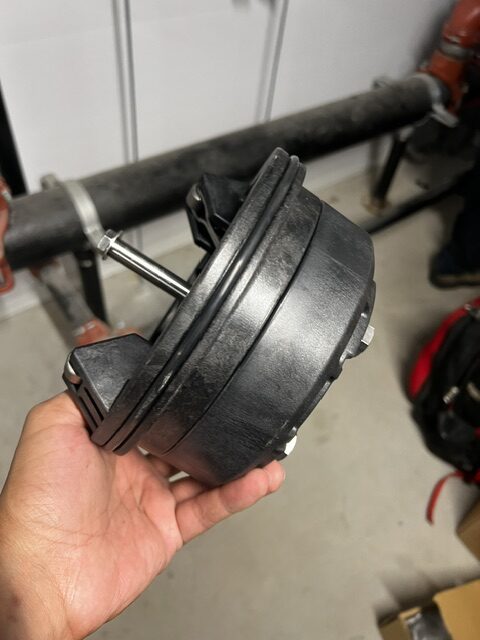
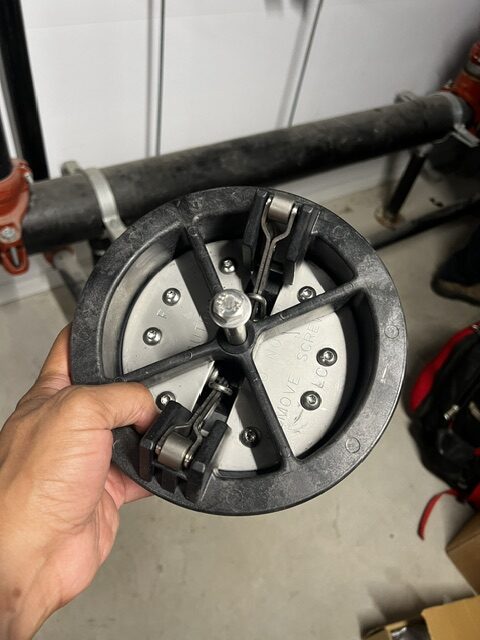
People sometimes picture a failed check valve as something you crack open and clean, a stuck spring, a bit of debris. On a device this size, that’s not how it works. A six inch check assembly is a fully intact, rebuilt unit that requires substantial water pressure to open. There’s no disassembling it by hand, no quick fix with a wrench. When it fails testing, the whole check gets replaced.
In this case, we ordered the specialty six inch replacement part the same day we found the failure. Parts at this size aren’t sitting on a shelf, it took about a week to arrive.
Why Coordination Matters as Much as the Repair
Here’s something most people outside the trade never think about, on a lot of fire protection systems, the valves are monitored. Shut one off without warning the monitoring company first, and you can accidentally trigger a fire department dispatch. Nobody wants a fire truck showing up because of a maintenance appointment.
Once the part arrived, we scheduled the shutoff directly with the fire prevention monitoring company for the following day. We removed the failed check, installed the new one, refilled the system, checked for leaks, vented the device, and retested. Once it passed, we hung the tag and filed the compliance report with the city, exactly as the regulation requires.
The Real Takeaway for Facility Managers
Most people, including most homeowners, would walk past a device like this and never know what it was. That’s fine, it’s not homeowner equipment. But if you’re responsible for a commercial building, this is exactly the kind of failure that annual testing exists to catch, before it becomes a real contamination event during an actual fire response.
If your facility hasn’t had its backflow devices tested this year, or you’re not sure when the last test was done, that’s worth checking now rather than after a failed inspection or, worse, after an actual incident.
Frequently Asked Questions
How often does a fire protection backflow preventer need to be tested. Annual testing is required by law in London and across Ontario for backflow prevention assemblies on fire protection systems.
What happens if a backflow preventer fails its annual test. The failure must be reported to the city, and the facility must arrange repair as quickly as possible. Larger or specialty devices may require ordering parts, which can take time.
Can a failed check valve be repaired without replacing it. On larger assemblies like a six inch double check, no. These are sealed, rebuilt units that require significant water pressure to operate, they can’t be manually disassembled or cleaned, a failed check has to be replaced.
Why is stagnant water in a fire sprinkler system a risk. Fire lines sit full of water that rarely moves, so it becomes stagnant and scaled over time. If backflow protection fails during a real event, that water can be pulled into the potable water system.
Does shutting off a monitored fire protection valve cause problems. Yes, if not coordinated properly. Many fire protection systems are monitored, and shutting off a valve without notifying the monitoring company first can trigger an unnecessary fire department dispatch.
Who is responsible for backflow testing on a commercial building. The building owner or facility manager is responsible for ensuring annual testing is completed and documented, though a licensed and registered backflow tester performs the actual test and reporting.
Author bio, Aron Oretan is the owner of Triton Home Service, a Licensed Red Seal Plumber and Steamfitter with 26 years in the trade, serving London, St. Thomas, and Oxford County.