
Most homeowners and builders have never heard of PPR pipe London Ontario. That is about to change. PPR is one of the most advanced piping systems available for hydronic heating and domestic water — and Triton Home Service is a certified installer.
I am Aron Oretan — a Licensed Red Seal Plumber and Steamfitter with 26 years in the trade and founder of Triton Home Service. Here is everything you need to know about PPR pipe fusion in London Ontario.
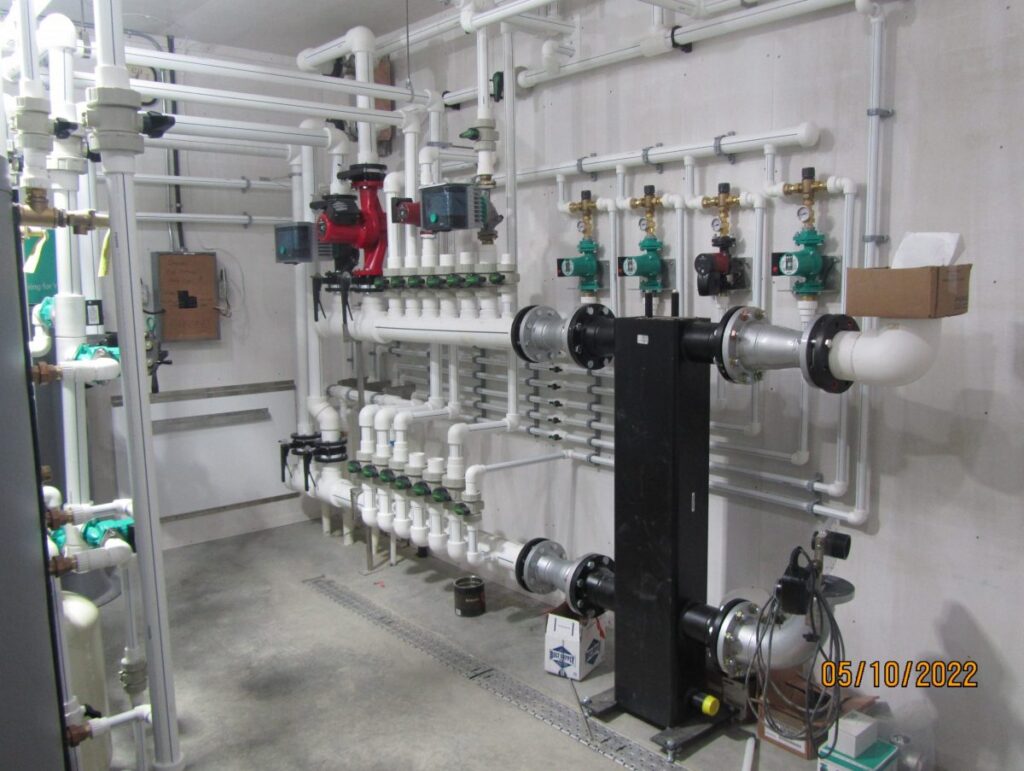
What Is PPR Pipe
PPR stands for polypropylene random copolymer. It is a rigid thermoplastic pipe that has been used extensively in Europe for over 30 years. It is now gaining significant traction in Canadian residential and commercial construction — and for good reason.
PPR pipe is installed using a heat fusion process. Pipe and fittings are heated to a precise temperature and fused together. The result is not a joint — it is a single continuous piece of pipe. The fusion point is actually stronger than the pipe itself. There are no solder joints to fail. No compression fittings to loosen. No threads to leak.
When you install PPR properly, you are installing a system with no weak points.
Uses for PPR Pipe
PPR pipe has multiple applications. At Triton Home Service our primary application is hydronic heating systems — in-floor radiant heating, baseboard systems, and combi boiler installations.
One of the most significant advantages of PPR for hydronic heating is its R-value. PPR has a substantially better R-value than copper and better than PEX as well. In practical terms this means PPR pipe requires less insulation — or in many hydronic heating applications, no insulation at all. That saves material cost and installation time on every job.
PPR pipe certified for domestic water usage is also available. The same fusion technology that makes PPR ideal for hydronic systems can be applied to your home’s domestic water supply lines.
The Fusion Installation Process
PPR installation is not a skill you pick up overnight. It requires specific tools, manufacturer training, and certification. That is exactly why Triton Home Service completed the manufacturer’s required training and certification program before installing a single foot of PPR pipe.
Here is how the fusion process works.
Each fitting and pipe end is cleaned carefully before any heat is applied. The fusion tool heats both the fitting socket and the pipe end simultaneously to a precise temperature. After the required heat soak time, the pipe and fitting are pushed together and held in position during a controlled cooling period.
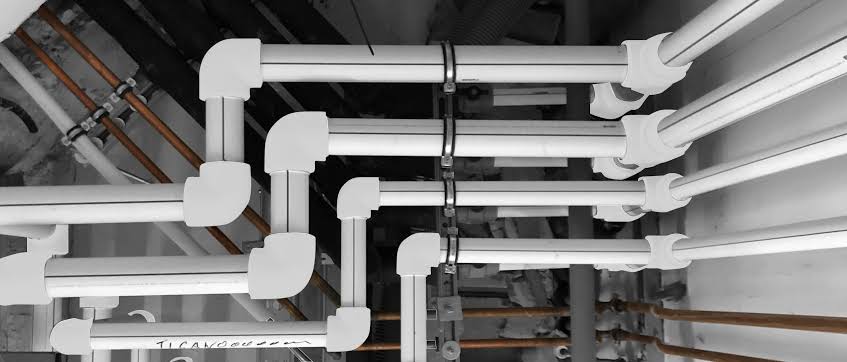
The result is a molecular bond — the two pieces of polypropylene become one. The elbow, tee, or coupling is not attached to the pipe. It is the pipe.
This process takes longer than sweating copper or crimping PEX. Every step — cleaning, heating, soaking, fusing, cooling — must be done correctly and in sequence. There is no shortcut. Done properly, the result is a piping system that will outlast the building it serves.
The 30 Year Warranty — What It Actually Means
The PPR pipe we install is Aquatherm — a manufacturer with over 30 years of proven performance in European markets. Aquatherm backs their pipe with a 30 year warranty — but only when installed by a certified installer who meets their warranty requirements.
Triton Home Service is a certified Aquatherm installer. That means when we complete your PPR installation and fulfill the warranty documentation requirements, you receive a formal 30 year warranty on the pipe system with coverage up to 15 million euros.
No copper installation comes with that. No PEX installation comes with that. This is a manufacturer standing behind their product for three decades because they know it will last.
How Long Does PPR Pipe Actually Last
The 30 year warranty is the guaranteed minimum. The actual lifespan of a properly installed PPR system is 70 years or more.
For context, copper pipe in a residential hydronic system has a generally expected lifespan of around 30 years. PPR more than doubles that.
When you factor in the cost of eventually repiping a copper hydronic system — labour, materials, disruption — a PPR installation that lasts 70 years is not just a premium product. It is a long term financial decision that pays for itself.
PPR vs Copper vs PEX — The Honest Comparison
Copper and PEX are trusted materials. They have been used in London Ontario homes for decades and they work. We are not dismissing them.
Here is the honest comparison.
Lifespan: PPR 70+ years. Copper approximately 30 years. PEX varies but generally 25 to 40 years.
Warranty: PPR 30 years with certified installer. Copper and PEX have no comparable manufacturer warranty on installed systems.
Insulation requirements: PPR requires significantly less insulation than copper due to its superior R-value. In many hydronic applications no additional insulation is required.
Joint integrity: PPR fusion creates no joints — the fused connection is stronger than the pipe itself. Copper has soldered joints. PEX has mechanical fittings. Both are potential failure points over time.
Installation time: PPR takes longer to install than copper or PEX. The fusion process requires precision and patience. That additional time is reflected in the installation cost.
Pressure rating: We test PPR installations to 220 PSI — far above the 20 to 30 PSI operating pressure of a typical hydronic heating system. The margin of safety is significant.
Applications: PPR is certified for hydronic heating, chilled water systems, and domestic water supply. It is a genuinely versatile system.
Who Should Consider PPR Pipe in London Ontario
PPR pipe is the right choice for homeowners and builders who are thinking long term.
If you are building a new home with in-floor heating and you want a piping system that will outlast the building, PPR is worth a serious look. Builder or developer who wants to offer a premium product with a documented 30 year warranty, PPR differentiates your build from every competitor in the market.
If you are replacing an aging hydronic system and you never want to do it again — PPR is your answer.
Book a PPR pipe fusion consultation in London Ontario.
Frequently Asked Questions — PPR Pipe Fusion London Ontario
What is PPR pipe?
PPR stands for polypropylene random copolymer. It is a thermoplastic pipe fused together using heat — creating a single continuous piece of pipe with no joints. It is widely used in Europe and increasingly popular in Canadian new construction.
How long does PPR pipe last?
A properly installed PPR system lasts 70 years or more. The manufacturer warranty — available only through certified installers like Triton Home Service — covers 30 years with up to 15 million euros in coverage.
What is PPR pipe used for?
PPR pipe is used for hydronic heating systems including in-floor radiant heat, baseboard systems, and boiler distribution. PPR certified for domestic water is also available for supply line applications.
How is PPR pipe installed?
PPR is installed using a heat fusion process. The pipe and fitting are heated to a precise temperature and fused together. The result is a molecular bond stronger than the pipe itself. Installation requires manufacturer certification.
Is Triton Home Service a certified PPR installer?
Yes. Aron Oretan completed the manufacturer’s required training and certification program. Triton Home Service is a certified Aquatherm installer authorized to provide the full 30 year warranty on installed systems.
How does PPR compare to copper for hydronic heating?
PPR lasts more than twice as long as copper, requires less insulation due to a better R-value, has no joints that can fail, and carries a 30 year manufacturer warranty. Installation takes longer than copper but the long term performance is significantly superior.
What pressure is PPR pipe tested to?
We test PPR installations to 220 PSI — well above the 20 to 30 PSI operating pressure of a typical hydronic heating system.
Can PPR pipe be used for domestic water in London Ontario?
Yes. PPR pipe certified for domestic water supply is available and can be used for both hydronic and domestic water applications in the same building.
Ready to learn more about PPR pipe fusion for your London Ontario home or build? Call 226-270-5177 or book a consultation online.
Aron Oretan is a Licensed Red Seal Plumber and Steamfitter, UA Certified Instructor, and founder of Triton Home Service. With 26 years in the trade, licences in plumbing, steamfitting, and gas fitting, and five years teaching at Fanshawe College, he brings classroom expertise and field experience to every job in London, Woodstock, St. Thomas, and Southwestern Ontario. Phone: 226-270-5177 | tritonservice.ca